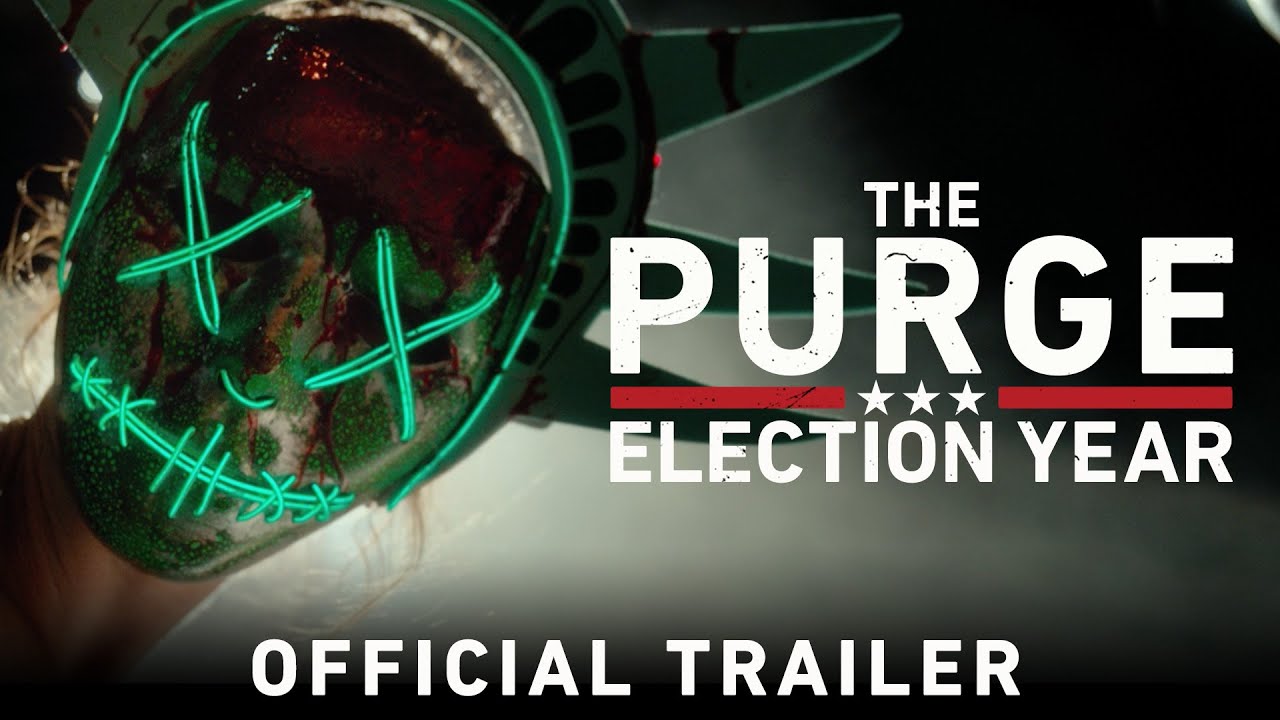
I remember watching the trailer for The Purge for the first time. The premise was so delightfully chilling, so deliciously provocative. Imagine a world where, for one night a year, all crime is legal. No consequences. No repercussions. The thought alone sent shivers down my spine, and I pictured all sorts of thrilling, thought-provoking scenarios playing out. Would people unleash their darkest desires? Would society crumble? Or would there be a surprising level of order amidst the chaos? The trailer promised a gritty, intense thriller, and I was so ready for it. Then I saw the movie. And... well, let's just say my excitement fizzled out faster than a sparkler in a hurricane. It’s a shame, really, because the core idea of The Purge is brilliant. It's a concept ripe for exploration, a canvas for examining humanity's basest instincts and the societal structures we build to contain them. But somewhere along the line, the execution of this fantastic idea went horribly, horribly wrong. And today, I want to dive into exactly why this movie, despite its killer concept, falls so flat.
Let's be honest, when you hear "all crime is legal for 12 hours," your brain immediately goes to some pretty wild places. Mine certainly did. I was expecting philosophical debates about morality, societal commentary on class disparity, and maybe even some darkly comedic moments as people tried to navigate this lawless night. I thought we'd get characters wrestling with their conscience, making impossible choices, and revealing hidden depths (or shallows) of their personalities. It felt like the perfect recipe for a horror film that actually made you think. You know, the good kind of horror, not just jump scares and gore. The kind that lingers long after the credits roll.
The Most Obvious Problem: The Inconsistent Logic
Okay, first things first, and this is a big one. The internal logic of The Purge is… well, let's just say it's about as sturdy as a sandcastle during high tide. The film presents this grand societal experiment, the "New Founding Fathers" having apparently discovered that purging the country of its "undesirables" and "aggression" leads to a utopian society for the rest of the year. Sounds great, right? Except the movie never really bothers to explain how this works.
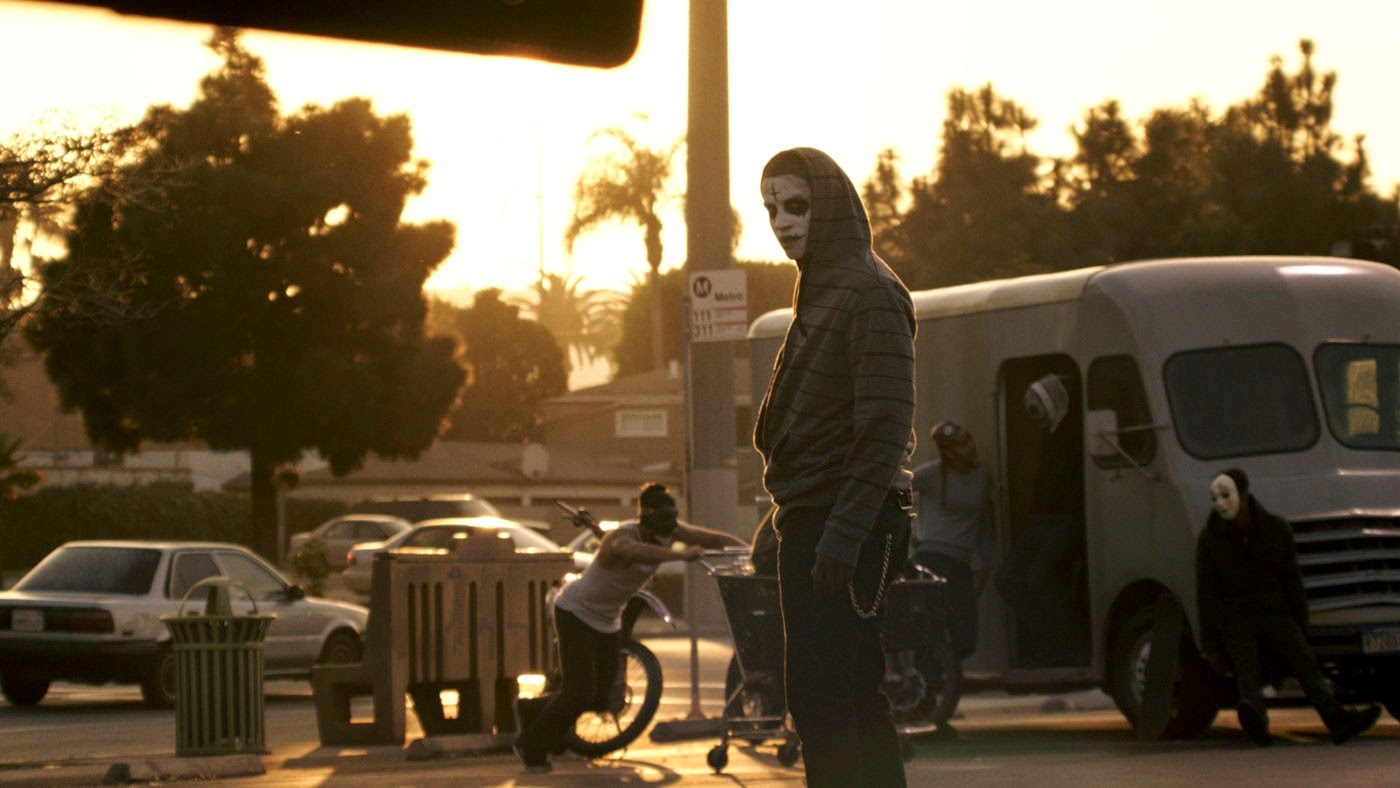
Like, if everyone knows they can just go out and kill people, why doesn't the entire country devolve into complete anarchy every single year? The movie tells us crime rates are low, unemployment is negligible, and everyone's happy. But then we see these masked psychos with automatic weapons and what appears to be a disturbingly well-organized black market for violence. Where's the disconnect? It's like they're saying, "See? It works!" but the evidence they present suggests the opposite. It’s a logical leap so enormous, you could fit a fleet of Humvees in it.
And don't even get me started on the rich people's perspective. They’re all safe in their fortified homes, presumably having paid for private security that can withstand a zombie apocalypse. Meanwhile, the lower classes are supposedly… what? Just locking their doors and hoping for the best? The movie tries to touch on class issues, but it feels like a superficial glance rather than a deep dive. It hints at the idea that the Purge disproportionately affects the poor, but then it just presents these scenarios as if everyone's equally vulnerable. It’s a bit of a head-scratcher, isn't it?
The "Moral" Justification is a Mess
The whole "New Founding Fathers" explanation for the Purge feels incredibly flimsy. The idea that unleashing pure, unadulterated evil for 12 hours a year leads to a more peaceful and productive society is… a stretch. A massive stretch. It’s the kind of justification you’d expect from a Bond villain, not a governing body supposedly running a functional nation.
The film hints that it’s about catharsis, about letting out all the pent-up rage and frustration. But if that’s the case, why aren’t there just organized riots or large-scale protests? Why does it manifest as random acts of violence? And if it's truly about reducing crime, wouldn't it be more efficient to, you know, invest in social programs, mental health care, and actual law enforcement? The movie skirts around any real societal analysis, preferring to focus on the immediate horror. Which, while not entirely a bad thing, it means the reason for the horror feels hollow.
Character Development? More Like Character Absence
Now, a good horror film, even one with a fantastical premise, needs characters you can invest in. We need to care about who lives and who dies, or at least understand their motivations. In The Purge, however, the characters are about as developed as a single-celled organism. We have the "ideal" American family, the Sandins, who are ostensibly the protagonists. The father is a security system salesman, which is, you know, convenient for the plot. The mother is… there. The teenage daughter is angsty and has a creepy boyfriend (of course). And the little boy is innocent and… well, he sees things.
Their primary conflict arises when their son, in a moment of youthful empathy (or perhaps just poor decision-making), brings a stranger seeking refuge into their home during the Purge. This stranger is being hunted by a group of well-dressed, vaguely menacing individuals. And that's pretty much it. The entire plot revolves around the Sandin family trying to protect themselves and their unexpected guest from these attackers.
But here's the kicker: the Sandins themselves are incredibly passive for most of the movie. They're not exactly proactive in their defense; they're mostly just reacting to whatever threat is thrown at them. Their motivations are generic – survival, family loyalty. There's no real exploration of their inner lives, their fears beyond the immediate danger, or what they might be tempted to do if they weren't so focused on survival. They feel less like fully formed individuals and more like plot devices to move the story from one peril to the next. You find yourself thinking, "Come on, you have a whole night of legalized mayhem, couldn't you at least have a little fun with it?" (Okay, maybe that's just me.)
The "Bad Guys" Are Even Worse
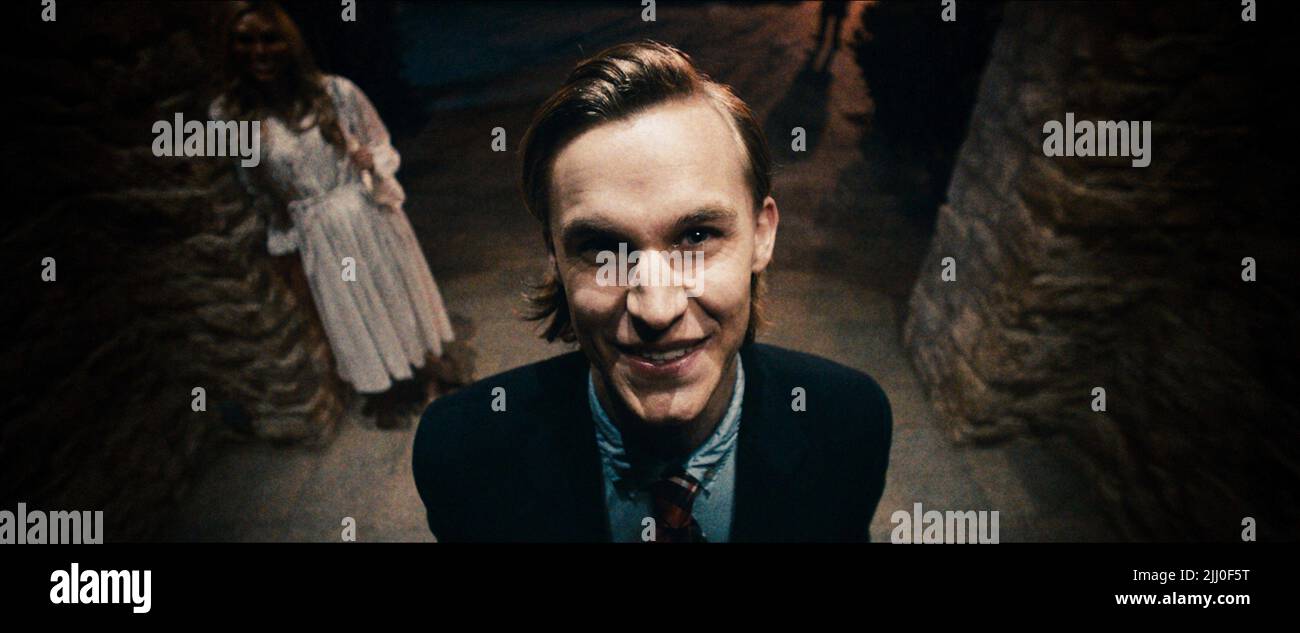
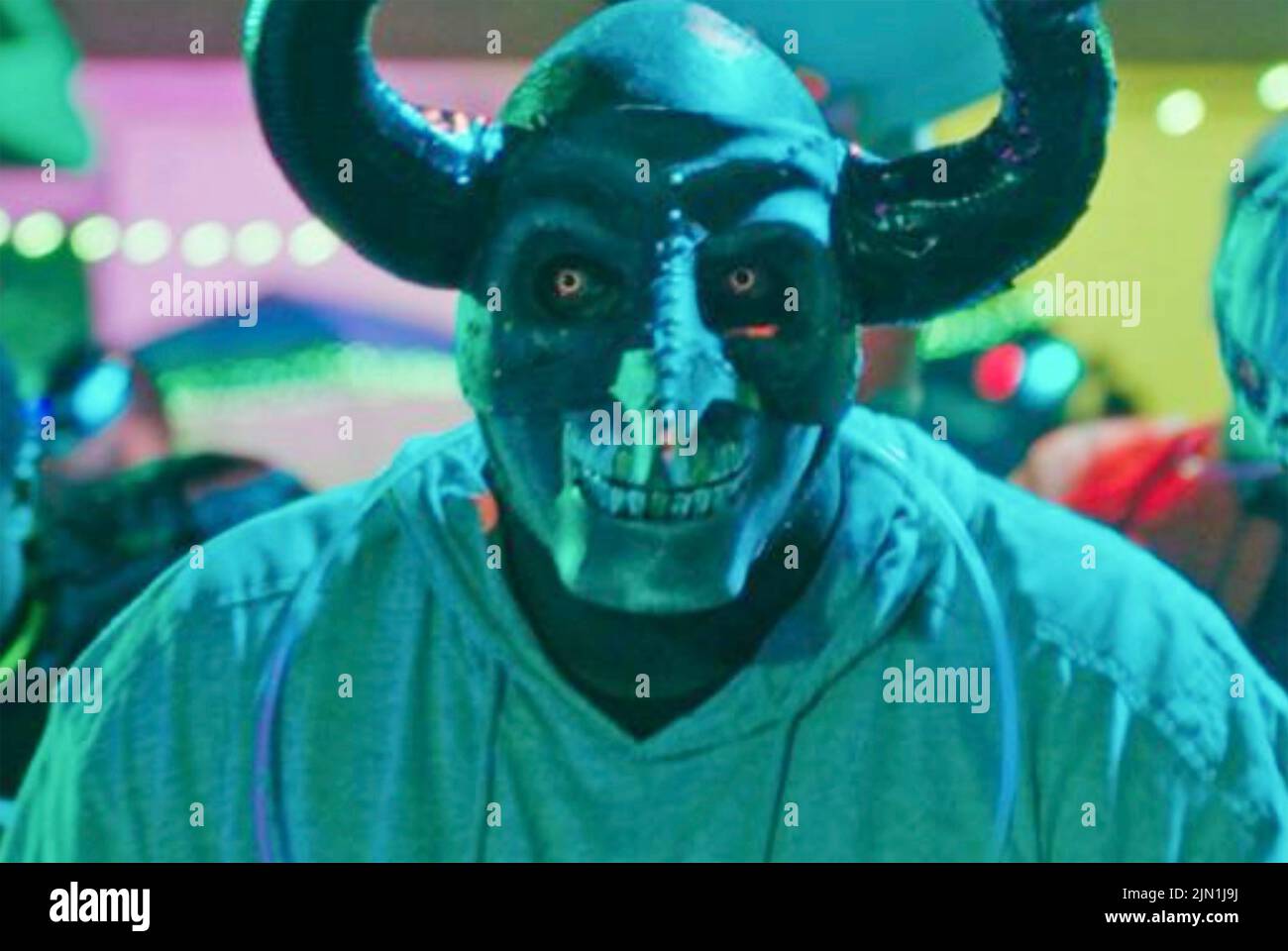
And the people trying to kill them? Oh, boy. They are the epitome of one-dimensional villains. They're just a bunch of people in creepy masks, chanting and brandishing weapons. Their motivation? "We're here for the stranger." That's it. No backstory, no psychological depth, no exploration of why they feel the need to participate in the Purge with such fervor.
The film tries to add a touch of social commentary by having the leader of the group be a seemingly affluent individual, suggesting that even the "respectable" members of society engage in this violence. But it's so shallowly presented that it doesn't land. They're just generic thugs, and their presence serves solely to create immediate danger. It’s like they’re a hive mind of evil, all driven by the same primal urge, which, again, is a missed opportunity for a more nuanced exploration of the Purge's impact.

The Missed Opportunity for True Horror
This is where I get really frustrated. The premise of The Purge has the potential to be genuinely terrifying. Not just in a "people are trying to kill me" way, but in a deeply unsettling, existential way. What does it say about us as a society if we need to engage in this kind of ritualistic violence to feel normal? What does it say about human nature itself?
The movie, however, opts for a more conventional, albeit poorly executed, home invasion thriller. The "horror" comes from the physical threat of the masked attackers. We get a few jump scares, some tense chase sequences, and the occasional moment of graphic violence. But it rarely taps into the psychological horror that the concept so readily offers. Imagine if the film had explored the temptation to Purge, the internal struggles of characters deciding whether or not to participate, or the long-term psychological scars left by such an event. That would have been truly chilling. Instead, we get a standard, predictable chase movie where the most interesting thing is the night it’s happening.
The Inability to Balance Action and Ideas
It feels like the filmmakers were so focused on creating suspense and action sequences that they forgot about the intellectual backbone of the story. They had this incredible "what if" scenario, but they decided to play it safe and deliver a generic thriller. It’s like being handed a perfectly sculpted block of marble and deciding to just chip away at it aimlessly instead of creating a masterpiece.
The film constantly hints at deeper themes – the hypocrisy of civilized society, the allure of primal instincts, the breakdown of morality. But these themes are always superficial. They’re mentioned, they’re hinted at, but they’re never truly explored or interrogated. The movie wants to have its cake and eat it too: it wants to be a thought-provoking social commentary and a mindless action flick, and it fails miserably at both.
The Ultimate Letdown: A Wasted Concept
Ultimately, The Purge is a prime example of a fantastic concept being squandered. The idea itself is gold, the kind that sparks conversations and ignites imaginations. But the film fails to deliver on its promise due to inconsistent logic, underdeveloped characters, and a reliance on predictable horror tropes. It’s a movie that leaves you thinking, "What could have been," rather than "Wow, that was amazing."
It’s like ordering the most exquisite, mouth-watering meal you’ve ever seen, only to be served a plate of bland, overcooked vegetables. The potential was there, the ingredients were all present, but the chef just didn't know what to do with them. And that, my friends, is the biggest problem with The Purge. It had a universe-sized idea, and it gave us a shoebox-sized execution. A real shame. A real, real shame.