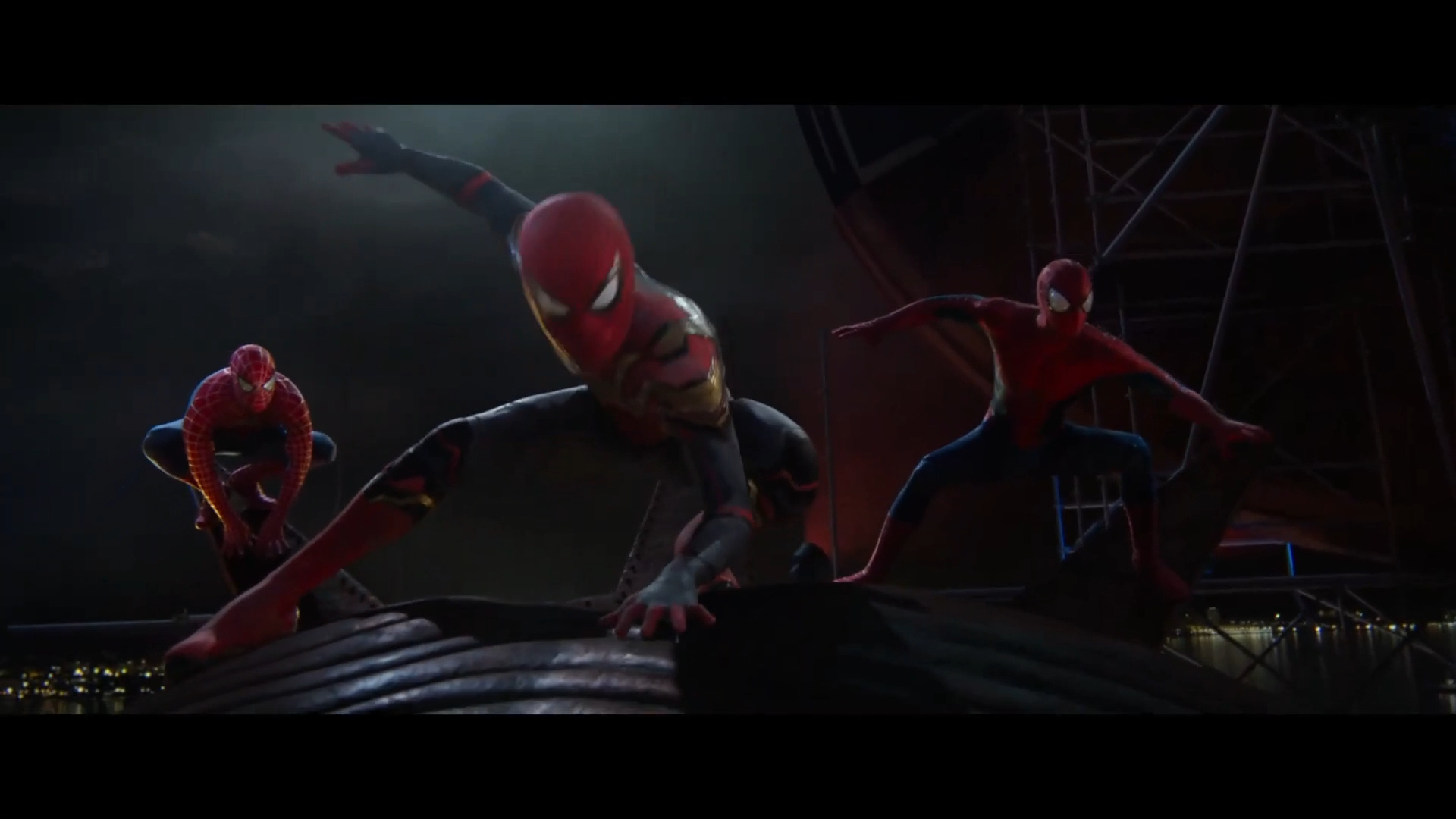
Remember Spider-Man 3? Yeah, that one. The one with the symbiote, Venom, Sandman, and Harry Osborn’s transformation from bestie to bio-fueled menace, all crammed into… well, a lot of movie. It’s a film that’s been debated, dissected, and meme-ified more times than a viral TikTok dance. And while we can appreciate Sam Raimi’s ambition (and Tobey Maguire’s wonderfully awkward emo dance), it’s hard not to look back and think: this could have been so much more.
We’re talking about a story that felt like a double-album rock concert where every band was trying to play their biggest hit simultaneously. The potential was massive, absolutely, but the execution? It felt a little… overstuffed. Like trying to fit your entire summer wardrobe into a carry-on for a weekend trip. It’s a common struggle, right? We all have those moments where we try to juggle too much, whether it’s a packed social calendar, an ambitious work project, or, in this case, the kitchen sink of superhero villains.
So, what if, instead of that sprawling, jam-packed blockbuster, Spider-Man 3 had taken a different route? What if it had embraced the magic of the slow burn, the intricate character development, and the sheer storytelling power of a mini-series?
The Unwieldy Symphony of Spider-Man 3
Let’s be honest, the original trilogy had a pretty sweet rhythm. Spider-Man introduced us to Peter Parker’s world, Spider-Man 2 gave us the iconic struggle with his duality and the brilliant Doctor Octopus. They were focused, character-driven narratives. Then came Spider-Man 3, and it felt like someone had opened the floodgates.
We had Peter grappling with the dark side of the symbiote – the heel turns, the questionable fashion choices (that slicked-back hair!), and, of course, the infamous dance. Meanwhile, Harry Osborn was on his own revenge quest, fueled by his father's legacy. And let’s not forget the heartbreaking arrival of Flint Marko, the Sandman, whose origin story was both tragic and visually stunning. Oh, and then there was Venom. Venom.
It was a LOT. Think of it like ordering a tasting menu at a fancy restaurant, but instead of delicate, curated dishes, you get an avalanche of appetizers, main courses, and desserts all at once. You’re left feeling overwhelmed, a little nauseous, and wondering if you’ve actually tasted anything properly.
This is where the mini-series format truly shines. Imagine each of these storylines getting its own dedicated time to breathe. We could have had multiple episodes dedicated to Peter’s internal struggle with the symbiote, exploring the seduction of power and the corruption of his good nature in painstaking detail. No more rushed moments of transformation or exposition dumps; we could have seen it unfold, felt the psychological toll, and maybe even understood his emo phase a little better (we’re still working on that one).
Sandman: A Tragedy in Six Parts
Flint Marko, the Sandman, is a character with immense potential for empathy. His motivation, driven by a desire to help his terminally ill daughter, is incredibly relatable. In Spider-Man 3, his story felt somewhat condensed, a supporting act to the main drama. In a mini-series, however, Sandman could have been the heartbeat of an entire arc.
Picture this: an entire episode delving into Flint’s life before becoming Sandman. We’d see his struggles, his desperation, and the ethical compromises he made. We’d witness the accident that transformed him, not just as a plot device, but as a traumatic, visceral event. And then, the ongoing battle between his scientific transformation and his inherent humanity could be explored over several episodes. We could see him wrestling with his powers, grappling with the morality of his actions, and perhaps even finding moments of redemption or regret.
This approach mirrors the success of other character-driven mini-series like Chernobyl, where historical events are meticulously explored through the experiences of those directly involved. Instead of a few scenes of Sandman reminiscing about his daughter, we could have had entire storylines showing his desperate attempts to reconnect with her, adding layers of emotional complexity that were sadly truncated in the film.
Harry Osborn: The Shadow of the Green Goblin
Harry Osborn's journey in Spider-Man 3 was arguably the most compelling, transitioning from loyal friend to vengeful antagonist. However, his transformation felt somewhat abrupt. He goes from grieving his father to donning the Goblin mask with a speed that, while dramatic, left little room for the audience to fully process his internal turmoil.
A mini-series would allow for a much deeper exploration of Harry’s psychological descent. We could spend an entire episode, or even two, tracing his grief, his manipulation by Norman’s lingering influence (perhaps even a spectral or memory-based manifestation of the Goblin persona), and his gradual descent into obsession. We’d witness his internal debates, his moments of doubt, and the painstaking process of him accepting – or succumbing to – his father’s dark legacy.
Think about the psychological thrillers that excel in this format. Shows like Mindhunter or The Killing masterfully build tension by focusing on character motivations and internal struggles. We could have seen Harry’s training, his meticulous planning, and the emotional cost of his crusade against Peter. This would have made his eventual confrontation with Spider-Man not just a plot point, but an emotionally devastating clash between former friends, deeply rooted in years of shared history and diverging paths.
Venom: The Symbiotic Relationship
Ah, Venom. The fan-favorite, the black-suited anti-hero. In Spider-Man 3, he felt a bit like an afterthought, a powerful entity that arrived late to the party and was dispatched with relative ease. His introduction, driven by Peter’s symbiote-induced arrogance, was interesting, but his overall arc was short-changed.

A mini-series could have dedicated significant screen time to the symbiotic relationship between Peter and the alien suit. We could have explored the allure of its power, the way it amplified Peter’s negative emotions, and the sheer terror of being consumed by it. This would have made his eventual rejection of the suit and its subsequent attachment to Eddie Brock (or perhaps even a different host!) much more impactful.
Imagine a mini-series where Venom is not just a monster, but a complex entity with its own desires and motivations. We could have seen his evolution, the way he influences his hosts, and the broader implications of his alien origin. This could have given us a truly terrifying and compelling antagonist, rather than a plot device that served to propel Peter’s redemption arc.
The Mini-Series Advantage: Deeper Dives and Cultural Resonance
The beauty of the mini-series format is its ability to give each narrative thread the space it deserves. Instead of juggling three major villains and Peter’s personal struggles, we could have had distinct arcs, allowing for:
- Character Depth: Exploring the motivations, backstories, and internal conflicts of each character with a level of detail that a feature film simply cannot accommodate. Think of the intricate character studies in shows like The Queen’s Gambit, where Beth Harmon’s journey is laid bare over time.
- Pacing and Tension: Building suspense gradually, allowing the audience to become deeply invested in each storyline. No more feeling like you’re rushing through plot points; each episode could be a deliberate step forward.
- Thematic Exploration: Delving into the complex themes of duality, corruption, vengeance, and redemption with greater nuance. We could have had episodes dedicated to the philosophical implications of Peter's actions or the societal factors that contribute to characters like Sandman.
- Fan Engagement: A mini-series allows for sustained buzz and discussion. Each episode could be a talking point, fostering a sense of community and anticipation, much like the weekly releases of shows like Game of Thrones or Stranger Things.
Consider the current landscape of television. Streaming services are practically built for this kind of storytelling. A show like WandaVision, for example, proved that a focused narrative exploring a character’s grief and psychological state could be incredibly successful, even with a more unconventional structure. Similarly, The Mandalorian offered self-contained adventures within a larger arc, demonstrating the power of episodic storytelling.

Practical Tips for a Spidey Mini-Series (If We Were the Bosses!)
If we were calling the shots, here’s how we might have structured it:
- Season 1: The Symbiote Struggle. Six episodes focusing solely on Peter’s acquisition and corruption by the symbiote. Each episode could explore a different facet of its influence – arrogance, anger, jealousy, the seductive power of darkness. Think of the psychological horror elements, akin to Black Swan.
- Season 2: The Sandman's Lament. Another six episodes, dedicated to Flint Marko. We'd see his life, his desperation, his transformation, and his internal battle. This would be a deeply human story, perhaps with a touch of the gritty realism found in shows like The Wire.
- Season 3: The Goblin's Vengeance. Six episodes charting Harry’s descent. We'd explore his trauma, his obsession, and his evolution into a formidable threat. This could have been a dark, psychological thriller, exploring themes of inherited trauma and mental instability.
- Season 4: The Lethal Protector. Finally, a season dedicated to Venom, exploring his origins and his unique brand of anti-heroism. This could be a more action-packed, morally ambiguous arc, tapping into the darker corners of the Spider-Man universe.
This approach would not only give each story the respect it deserves but also build a richer, more complex tapestry of the Spider-Man universe. We’d get to know these characters on a much deeper level, making their eventual confrontations all the more impactful.
A Reflection on Life's Juggles
Looking back at Spider-Man 3’s ambitious, albeit chaotic, narrative makes us reflect on our own lives. How often do we try to cram too much into too little time? We’re juggling work, family, social lives, personal growth – it’s a lot! Sometimes, like the film’s creators, we might overcommit, trying to achieve too many things at once, only to find ourselves feeling overwhelmed and less effective.
The mini-series lesson is a good reminder: sometimes, less is more. Focusing on one or two key things at a time, giving them our full attention, and allowing them to develop organically can lead to more satisfying and meaningful results. It’s about recognizing our capacity, pacing ourselves, and understanding that not everything needs to happen at once. It's okay to have arcs, to have phases, to let stories unfold at their own pace – both on screen and in our everyday lives. After all, even a superhero needs to breathe.